31 December 2008

2009--The Year of Dante

So I've decided that 2009 shall be my year of Dante's Divine Comedy.  Or at least, January through May will be devoted to Dante.  Over the past couple of days, I've been reading various introductions and background-type essays.  But this morning, I sat down and read Canto I of the Inferno in a couple of different translantions (Sayers and the Hollanders) and then read all kinds of commentary and notes just on that first Canto.  And I've read Dante before, but I feel like for the first time I'm not just studying Dante but am really understanding Dante.  It's not that I'm just getting it intellectually; it's more that I feel like the whole thing is actually speaking to me, you know?, on many levels at once:  imaginative, emotional, spiritual.  And it seems to me, right now anyway, that that's the whole thing about Dante.  Yes, it's allegory, but it's more than "just" allegory.  It operates at the literal level, but it's operating at all these different levels of human experience all at the same time.  And none of these levels or meanings is exclusive of the others; rather, each informs the others and enriches the others.  I know that what I'm getting at is maybe obvious--it's what I've known intellectually about Dante all the time.  But I feel like for the first time I'm experiencing it, rather than just understanding how it's supposed to work.  And I marvel at the skill of it all.  I'm not just understanding, but I'm being moved, changed.

But really, what's motivated this particular look at Dante is that I'm teaching Dante next semester.  And as I've been reading about Dante and thinking about Dante and finally reading Dante's work, all I think, in reference to the course, is, "How are my students going to deal with this?  How are they going to respond?"  More specifically, I'm concerned that they might not respond at all, that they might just shut down.  Reading Dante is no easy task.  And I'm afraid that the room will be filled with apathetic students who don't really know how to work at this task.  The translators and commentators I've been exploring seem to agree that reading Dante requires participation and work on our part, and in my experience, many of my students just seem interested in a passive reading experience, if they are willing to read at all.

But really more significant, I think, that the necessity of our being active readers is that Dante's way of thinking about the world is simply so alien to so much of postmodernity.  Dorothy Sayers says, "We must also be prepared, while we are reading Dante, to accept the Christian and Catholic view of ourselves as responsible rational beings. . .The Divine Comedy is precisely the drama of the soul's choice."  This way of thinking about the self and the world seems to me to be so foreign to much of our culture.  In Dante's world, sin matters; it enslaves us in the present world and for all eternity.  As a culture, we can think in terms of sex addiction, but most of us don't really buy the idea that lust, one of the seven deadly sins, can destroy our soul.  I, for one, am willing accept Dante's general scheme of things; the choices we make do matter, and maybe what matters the most is how our inner selves are affected.  Sin and evil do exist.  But in a world where absolutes are eschewed and a notion of the soul is thought of as simply out dated, what place does Dante have?  And how can I convey to my students that these questions matter, or that at least to make sense of Dante, we have to suspend our disbelief?  I'm feeling so inadequate to the task at hand.

But Dante.  He's like my Beatrice, at least for the moment, a bright ray of light, leading the way to some sort of Truth.

30 December 2008

Martha and Conan

I've been meaning to post this for a while; it's too funny.

29 December 2008

The Contemporary Freak Show

For some reason, I've always been interested in the "old school," P.T. Barnum-style side show.  In fact, I really like the term "freak show," probably because I've always been morbidly fascinated by the 1930s film Freaks, which you, dear reader, should see if you've not already.  But for better or worse, in our society, we seem to have decided that the freak show is no longer socially acceptable.  And I do think this cultural movement is for the better:  I cannot really at all justify the all-too-human tendancy to objectify and gawk at the disabled.  And this is what the freak show (as opposed to the "geeks" in the sideshow) is really about.

Lately, I've found myself watching the Discovery Channel and its sister channels Discovery Health and The Learning Channel a little too frequently.  The line-up includes such favorites as Jon and Kate Plus Eight and 17 Kids and Counting, which  are interesting and seemingly-benign looks at families which by society's standards are extraordinarily large.  But Little People, Big World, often follows Jon and Kate.  LPBW follows the Roloff (spelling?) family, composed of two LP parents and their four children, only one of whom is a LP, or little person.  In many ways, they are an average family, but isn't the whole selling point of the program that, at least in height, they are not at all average?  I mean, don't we watch it as our great-grandparents might have gone to the freak show?  In the end, the Roloffs do live much like an average, upper middle class family, however, and I don't think that we as viewers tune in just to gawk, although that's certainly part of the attraction.  We might say some of the same things about the Style network's Ruby, which follows a morbidly obese woman as she both attempts to lose weight and negotiate a world not really suited to her current body.  And on the one hand, the program is interesting in that rather than encouraging us to objectify Ruby, we are encouraged her to see her as fully human, with the struggles and emotions just like all the rest of us.  And yet, she's only notable because she's the "fat lady."

I am much more concerned about an entirely different set of programs I've recently seen advertised as part of the Discovery / TLC lineup.  Most of these seem to be one or two time "specials," as opposed to entire series, and even their titles are evocative of Barnum's side show, titles like Treeman and Mermaid Girl.  In both cases, we are invited to gawk at people with conditions that lead to horrible disfigurement.  I only saw a small portion of each of these, but it seems like the majority of each hour-long program is devoted to exploring the medical aspects--the various approaches to possible "cures," each individual's life-expectancy, how the condition has developed over time--of both individuals.  But really, I don't see how this is much different from the early-twentieth century side show.  We, as viewers, are still pointing and staring because of the disability.  We may or may not feel some compassion, but compassion does not seem to be what motivates us to watch.  And clearly, I'm not necessarily pointing the proverbial finger at all of you as viewers; I've watched too.  I've seen various specials on types of dwarfism and how the individual is affected, the specials about conjoined twins, and notably the recent spectacle of the Indian girl with either six or eight arms (apparently, she's considered by some to be an incarnation of a particular deity.)  I have to admit that I think documentaries about transsexuals are especially interesting.  But the selling point, the attraction of each of this is that each is about a "freak," about someone who is not like the mainstream because of a pathology, a malady, a disability.  We see these conditions as something to be corrected, and we treat these inidividuals as objects or stand-ins, not as inidivudals.  I'm sure that Treeman and Mermaid Girl have actual names, but we're willing to reduce them to interesting and notable and valuable as nothing more than their freakishness.

But my question is this:  are many of these programs different from the 1930s freak show?  The medium is different in that instead of carnival barkers encouraging us to pay and extra nickel and step inside a tent, we simply flip to a particular channel on Sunday night.  But aren't our motivations the same?  Don't we tune in to see the physical deformities?  to marvel at the freaks?  to point and stare and feel both pity and terror?  Isn't this the same as the now out-of -fashion freak show?

21 December 2008

Five Other Lives

So it's been snowing for the last 48 hours or so, and I'm feeling pretty much over it.  Does anyone know the Jimmy Bufet song about "I wanna go where it's warm?"  There's a line in there about having cabin fever--I can related to that right now.  But that wasn't my intended topic when I started this post.  In The Artist's Way, Julia Cameron has an exercise in which she asks us to list what we'd do or be if we had five alternate lives.  And that's been on my mind lately:  What would I do if I weren't busy being an English professor?  First, I'd definitely at least consider being a makeup artist.  Really.  It would be fun to design makeup for stage, wouldn't it?  I'd also be a writer:  there's so much I'd like to write about, including reviews of all kinds of stuff.  And yes, writing reviews is real writing.  Third, I'd design and sew stuff.  Fourth, I'd be an attorney.  I think that copyright and intellectual property law would be super interesting.  I don't so much see myself as a trial lawyer, more someone who'd work for a big corporation.  On a related note, I'm interested in "open source" issues lately, especially as related to crafting and such.  Fifth, I'd make my living making and crafting stuff.  Ok, that was vague, but there are so many things I'd like to do in that area.  This exercise--listing one's alternate career ambitions--seems important to me because it seems to say a lot about how I'd really, really like to be spending my time, you know?  And I am so not ready to quit my job--that's not the point at all.  I am, for the most part, quite satisfied with my job (I'm even getting over my general irritation with my students!), but I always feel like I want to spend more time doing some of these other things.  I want to sew and cook and craft more.  I want to write more for a general audience.  I'm even considering starting a new blog for makeup tutorials and reviews.  And although YouTube is absolutely FULL of makeup tutorials, it feels like something I might want to do just  because it would be fun, not because we need yet another lesson in creating the perfect smokey eye.  These things interest me and bring me a sense of creative fulfilment.  As I move towards 2009, I want to think about how I want to spend my time outside of work, about what I really enjoy. 

10 December 2008

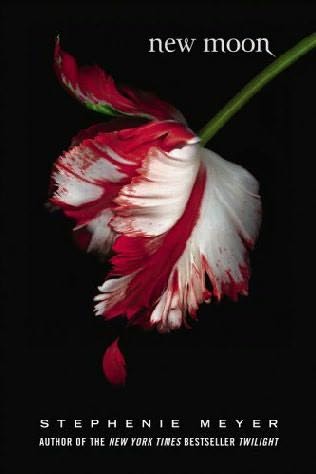
New Moon

Yesterday, I finished New Moon the sequel to Stephenie Meyer's Twilight.  And I think that the best I can say for it is it's really kinda uninteresting.  I mean, it's like Bella is all torn:  should she be true to Edward, or should she move on to Jacob, who is not terribly interesting, as a character, but is certainly more age appropriate as a boyfriend.  And that's about all there is to it.  I have to admit that I enjoy a good YA high school-romancy novel; I'm all for that.  And, at least so far, that's about all that Meyer's Twilight Saga is.  The vampire / supernatural / pseudomythical stuff reads like a veneer and nothing more.  And as YA romance, it's OK, not great but OK.  But I really can't see that it's anything more.  And really, silly YA romance novels are A-OK.  But why are we pretending that this is something more profound?  I don't get it.  Interestingly, there are moments where the novel could become something more.  Bella, for example, faces several moral delimmas--her values come into conflict, and it starts to look like she's forced to make an ethically complicated, difficult decision.  But in the end, she doesn't really agonize over these decisions; they come easily.  And she often doesn't have to make these difficult decisions--the plot somehow intervenes and makes them for her.  And I have to say that there's nothing especially interesting (and certainly nothing sexy, IMO) about the Byronic, brooding vampire, caught between his bloodsucking nature and his revulsion over this nature.  This is somehow so passe.  I want to say, "Dude, you are a vampire.  Deal with it."  I guess that this conflict, again, could allow for something more profound to happen in this work, but Meyer never really commits to "going there" and dealing with difficult questions.  And still, noone seems interested in the fact that, at the end of it all, Edward is basically very controlling and even manipulative when it comes to Bella  Given current statistics pertaining to relationship violence, especially among teens, isn't this about the last thing our society needs?  I mean, here we are, encouraged to really romanticize the relationship between the 17-year-old female mortal and her 110-year-old vampire lover, when it's just a repackaging of the same old controlling boyfriend.

So Over It

Ok, as I'm midway through the final week of the semester, I have to just say that I am so over it.  I'm ready to be done.  I'm tired of reading bad, incoherent essays.  I'm tired of acting supportive.  I'm just tired.  I'm feeling really kinda worthless these last few days, and it's like I have nothing left to give to my job.  And although I know it's totally normal for me to feel this way at the end of a semester, it still really sucks.  I mean, I don't have any semblence of patience or tolerance left--I guess that I'm just descending to short-tempered and snippy, with students particularly.  And while I hate feeling that way, there's also part of me that feels like saying to the students, "Hey, you deserve this.  You've turned in crap work all semester, and now it's catching up with you.  You have consistently ignored instructions on assignments and have refused to meet with me all the times I required individual conferences.  I had those conferences so that I could gently discuss the problems you've been having in class in time for you to change and somehow redeem your grade.  But you blew it off, and now it's too late."  I mean, that's life, right?  It's not so much that I hate to be the bad guy; it's more that I hate dealing with all the crap students can sometimes give when their grades turn out to be lower than they'd hoped.  And really, it always astounds me when a student has earned, say, Cs and Ds on every assignemnt and then acts shocked when he gets a D+ for his grade in the class.  That kills me.  Often, they send not just whiney but downright threatening e-mails:  "If we can't resolve this, I'll be forced to go to the dean."  And I always think, "Be my guest.  I'm over dealing with you, and the dean is not going to magically change your grade just because you think she should."  I guess that all the bad essays are bringing me down.  It's like once finals week rolls around, I'm the Grinch or something.

03 December 2008

Thursday Thirteen: Thirteen Things I Am Sooooooooooo Over

13.  Sex and the City

12.  Panic attacks


11.  Grey's Anatomy

10. Students who don't bother to purchase the required books for their classes

9.  Students who don't bother to read the assigned reading in their classes

8.  Students who e-mail at 11:30pm the night before an assignment is due and request that I respond ASAP

7.  New England winters

6.  Students who open emails with "Hey"

5.  Lindsay Lohan

4.  Lame-ass excuses

3.  Emails written without caps or punctuation

2.  Students who don't follow directions

1.  Sarah Palin

01 December 2008

I Heart Umberto

So here's my self-depricating preface:  I realize that claiming I just LOVE Umberto Eco is silly, at best.  However, I consider this progress of a sort.  I mean, I used to claim I was "in love" with Inspector Morse, and he's a fictional character.  Eco (or "Umberto" to his closer associates) is, at least, a real person.  And he's brilliant and wonderful and exactly the sort of academic I want to be.

So why, you may ask, do I love Umberto?  What makes him so great?  Hmm. . .where to begin. . .I love that he, of course, knows all about canonical literature, but he can connect it to pop culture in wonderful, insightful ways.  So one minute he's talking about Dante, and the next he's talking about Superman.  Superman seems to come up a lot, actually.  But I love that Eco realizes that elements of popular culture move us and inform us in the ways that serious literature can.

I love that Eco can talk about how language and literature work in this academic, informed way.  But he can so easily switch registers and explain why literature is powerful for the average reader.  Even more basically, I love that he acknowledges that language and literature are powerful, that they can move us on a level that transcends the literal and the logical.  I love that Eco recognizes the tension and balance between the openendedness of texts and the limited possibilities of interpretation.  But it seems to me that all the while, he allows that meaning does, in fact, exist and that it's not completely relative.  Eco realizes, of course, that ultimately words matter.  And he reminds us that texts and how we read them and even whether we read them--all these matter too.

But here's where I get silly.  I often wonder, "What would Eco think?"  This seems to be becoming my personal mantra for how I think about texts.  It's a reworking of the WWJD.  (Side note:  I REALLY want a tee shirt that says, "What Would Gandalf Do?" but that's another post).  And when I watch Lost or listen to Joni Mitchell's "River" until I cry or read Dickens, I have this fantasy about discussing it with Eco.  In my fantasy, we drink beer.  Does he drink beer, I wonder?  And he explains that Lost is powerful precisely because of the ways it taps into other texts we always already know.  And I tell my favorite episode from the Thursday Next series--the one where Hamlet, in the midst of identity crisis, is thrilled to discover that Mel Gibson plays Hamlet.  Hamlet, you see, LOVES Leathel Weapon.  And this is funny to me but powerful in a way that Eco could explain.  In "On Literature," Eco tells us that literature has an "intangible power," and so we understand why Hamlet, identity crisis and all, moves us.  Over beer, Eco also explains to me all kinds of grand stuff about the Middle Ages.  This part of the fantasy is probably a rehashing of his "Ten Little Middle Ages."  And at some point, I tell him that Foucault's Pendulum is kick ass.  And after enough beer, we talk about Salman Rushdie.  This is my perfect fantasy.  *sigh*  And so I guess that I'm "out."  I'm positively in love with Umberto Eco, dispite the fact that he doesn't know that I exist.  But hey, a girl can dream.